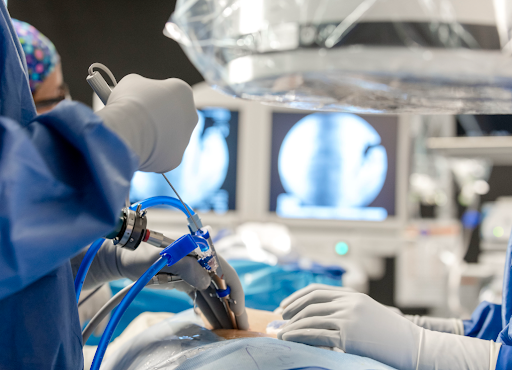
Advancements in cervical disc herniation surgery have introduced innovative techniques that provide less invasive and more effective treatment options. Among these, the posterior endoscopic approach stands out as a modern solution for managing cervical disc herniation.
This minimally invasive method offers precise, targeted treatment with reduced recovery times and fewer complications.
What is posterior cervical endoscopy?
Posterior cervical endoscopy is a minimally invasive surgical procedure used to treat cervical disc herniation without requiring spinal fusion or the implantation of prosthetic devices. This technique accesses the herniated disc through a small incision (2-3 cm) at the back of the neck, avoiding the front structures of the cervical spine.
Using advanced endoscopic equipment with precise illumination and magnification, the surgeon can remove the herniated disc while preserving the integrity of the surrounding tissues and the disc itself. This approach minimizes trauma to the muscles and soft tissues, ensuring a smoother recovery.
Benefits of the posterior endoscopic method
A minimally invasive approach
Unlike traditional techniques, such as anterior approaches with spinal fusion, the posterior endoscopic approach significantly reduces trauma. By displacing rather than cutting through the muscles, this method minimizes:
- Post-operative pain,
- Risks of complications,
- Recovery time.
No implants required
A major advantage of this technique is that it does not involve the use of prosthetics or other implants. This preserves the natural structure and mobility of the cervical spine, avoiding long-term complications or mobility restrictions often associated with implants.
Faster recovery
Because it is minimally invasive, posterior endoscopy supports a quicker recovery process. Patients typically experience less post-operative discomfort and can return to their normal activities much sooner than with traditional surgical methods.
Who is a good candidate for this procedure?
This technique is especially suitable for patients with cervical disc herniation causing cervicobrachial neuralgia—a condition characterized by radiating pain in the arm, numbness, or muscle weakness.
The suitability of the posterior endoscopic approach depends on factors such as the location and size of the herniated disc. A thorough evaluation is conducted to determine whether this method is the best option for each patient.
How is the procedure performed?
During the procedure, the patient lies face down. A small incision is made near the lateral edge of the spinous processes at the back of the neck. The endoscopic system is then inserted to remove the herniated disc with precision while preserving surrounding tissues.
Thanks to the minimally invasive nature of the procedure, post-operative discomfort is typically mild. Some patients may experience temporary tingling sensations, but these usually resolve over time.
Potential risks of posterior cervical endoscopy
While the posterior endoscopic approach is generally safe, as with any surgical procedure, there are some associated risks, although these are rare and well-managed:
- Temporary nerve irritation,
- Hematoma requiring surgical intervention,
- Infection (minimized by the small incision size).
Patients are informed about these risks in detail to ensure they can make an informed decision about their treatment.
Why consider posterior endoscopy for cervical disc herniation?
Posterior cervical endoscopy represents a significant advancement in treating cervical disc herniation. Its benefits include:
- Minimally invasive technique,
- No need for implants,
- Faster recovery times,
- Reduced post-operative pain.
Preparing for your consultation
If you are dealing with a cervical disc herniation and considering treatment options, posterior endoscopy could be the solution you need. It offers an effective, less invasive alternative that prioritizes patient recovery and quality of life.
For international patients, an initial consultation via video call is available to discuss your condition, evaluate your needs, and plan for potential treatment.
Take the first step toward relief and recovery by scheduling a consultation with an experienced specialist today.
Laisser un commentaire