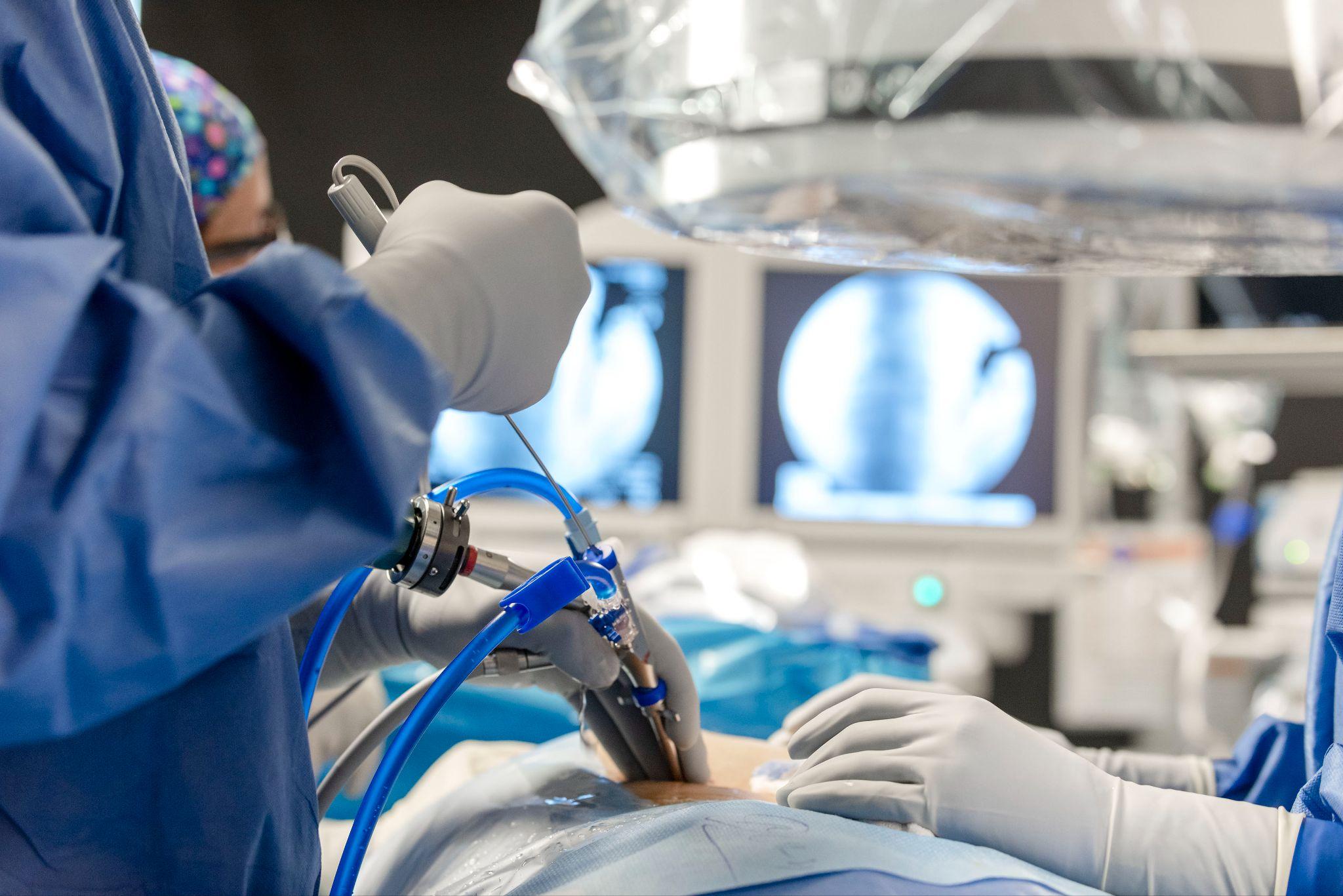
Endoscopic spine surgery : Cervical disc herniation treatment
Cervical disc herniations can be a significant source of pain and discomfort for many patients, profoundly impacting their quality of life by limiting mobility and causing severe pain. However, with recent advances in surgical techniques, an innovative and less invasive approach is now available: endoscopic spine surgery.
Understanding cervical disc herniation
A disc herniation occurs when the nucleus of an intervertebral disc escapes through the surrounding fibrous ring. This protruding fragment can press on nerve roots, causing pain radiating into the arm. In more severe cases, the spinal cord itself may be affected, leading to complex neurological symptoms.
The importance of diagnosis
In addition to physical examination, the diagnosis of a cervical disc herniation relies heavily on MRI, sometimes supplemented by electromyography or CT scans. Symptoms vary depending on the exact location of the herniation. For instance, a C7 – D1 herniation might lead to weakness and tingling in the fingers, while a C4 – C5 herniation could present as shoulder pain or weakness in the upper arm.
Endoscopic intervention: A significant advancement
The goal of cervical disc herniation surgery is to remove the herniation and decompress the nerve. This procedure, performed through a short incision on the anterior aspect of the spine, utilizes the endoscopic system to largely preserve the intervertebral disc. This less invasive approach offers numerous advantages over traditional methods.
Benefits of the endoscopic technique
Beyond being less invasive, endoscopic spine surgery results in particularly straightforward postoperative recovery. Patients experience immediate relief and can quickly resume their daily activities. This rapid recovery is a crucial aspect for many patients eager to regain their mobility and quality of life as soon as possible.
The patient journey: From preparation to recovery
Prior to the procedure, patients receive attentive and professional care. An orderly escorts them to the operating room, where they are greeted by the anesthetist and their nurse in the pre-anesthesia room. Once sedated, patients benefit from the expertise of the surgical team for about an hour. After surgery, patients are monitored in the recovery room before returning to their ward.
Rapid and guided recovery
Recovery after endoscopic spine surgery is often remarkably swift. Upon returning to their room, patients are offered a snack or meal. The IV is removed, allowing them to shower and stretch their legs. Physiotherapists, in collaboration with the surgical team, visit the patient the same evening in their room, and the next morning for the first rehabilitation session.
A new era for cervical disc herniation treatment
Endoscopic spine surgery, as performed by our team, represents a significant advancement in the treatment of cervical disc herniations. This less invasive approach provides patients with a faster, less painful recovery while preserving the integrity of the intervertebral disc as much as possible.
If you are suffering from pain related to a cervical disc herniation, consider consulting with the Center for Endoscopic Spine Surgery in Bordeaux to explore the benefits of this technique.
Laisser un commentaire